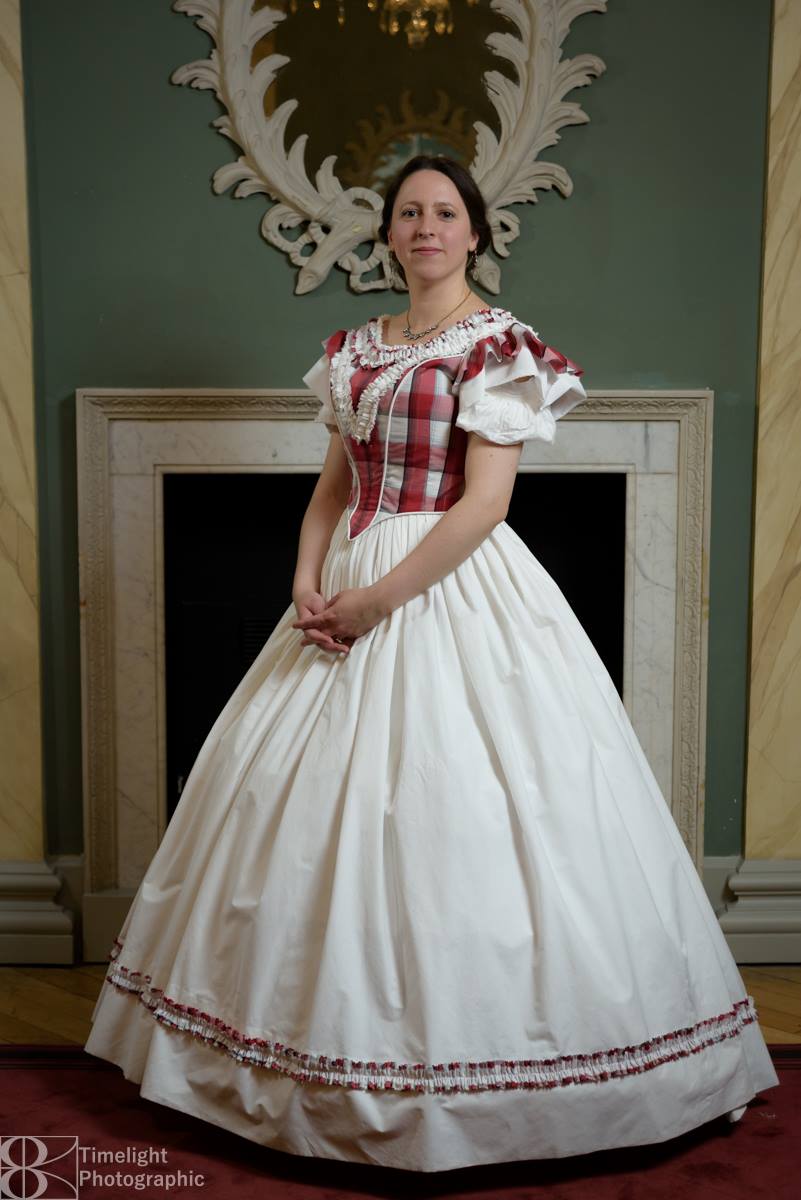
Tuesday, 24 May 2016

Aladdin Wigs: Padding the wig block, and steaming the fosshape foundation

As I've mentioned before, my annual Oct/Nov job is making the wigs worn by the Dame for the Mercury Theatre's Christmas Pantomime.  Last year was my third year on the job, and involved the wigs I'm most proud of.  Luckily for me, each year as my skill level has increased, so have the complexities of the designs.  So in the first year, thankfully, they were fairly simple whilst I was working out the methodology of creating the structure, and using fosshape and synthetic hair for the first time.  In my third year however, I could afford to work on something a bit more involved.

For 2015, the theatre chose to put on Aladdin, and so I was tasked with the making of six wigs for Widow Twanky, as well as a 'pagoda' costume that was added to the mix partway through.

Designs and measurements on the back of my studio door, ready to get started.

This year I chose to use a different method, and so far the best method, for transferring the actor's measurements to the wig block.  To do so I first wrapped the top of his head, including all hairlines with cling film.  I then used layers of scotch tape directly over this to hold the cling film to the head, and continued to tape until the entire hairline and head were covered. I then took a sharpie and traced his hairline, which still showed from underneath, onto the tape.  I'd used scotch tape for this purpose as marker pens tend to rub off regular sellotape.  I also marked out the top of the head, CF & CB, and ear to ear over the top.  Once I had all my markings, I could ease the tracing off his head, and mount it on a wig block.

Once the hairline was taped onto the block, I padded out the rest of the head by cutting slits into the top of the tracing, and padding out the inside with strips of newspaper until the shape was completely padded out to match the tracing.  I could then tape the slits shut.  I also taped over all the sharpie markings so they wouldn't rub off during steaming.  I then sharpied over the top of this so that the hairline markings would get transferred to the fosshape when steamed.  I had to re-sharpie the hairline every couple of goes in order to keep getting a clear mark on the fosshape.

The brown shows the original hairline, but I enlarged to the orange line to give a bit of wriggle room to stop stray hairs peeking out.
This method allowed for a really accurate head measurement, and I will continue to use it for future wigs.

I then created the fosshape wig base much as I've always done.  First I cut and sewed up a basic skullcap shape in the fosshape, and pinned it over the wig block, making sure it would cover all the hairline.


Then, using the hand held steamer in the photo, I thoroughly steamed the entire thing until it was completely snug around the head, and there were no soft patches left.


I could then ease this off the block, and use the transferred sharpie line on the inside of the fosshape to trim it to the correct hairline.


Here you can see one trimmed, painted with acrylics, and with a wire frame to hold up the large hairstyle pinned in place.

Saturday, 21 May 2016

Tudor Hats: Part II

   This has been sitting in my drafts for a while, so time to let it out in the open.  I made this about a year ago.

   The second in my Tudor hat series is a french hood, based on the one worn by Anne Boleyn in this portrait.  Whereas with Catherine of Aragon I did my own thing when it came to decoration, this one I kept very close to it's original inspiration image.


   The crescent came together very quickly.  Again I used a layer of buckram, edged with millinery wire, and shaped it before moving on to fabric.


   You can see from the photo that the pattern I used was one that Jane (Smith, my teacher) had originally made for Anne Boleyn at The Globe in 2010.  Having googled it, here's what I assume is Jane's original:

The blue is lovely
   I used more of the same black stretch velvet from Catherine for the crescent, then stitched the pearls on in clear thread.  The frill is gold organza, which I had pleated for me by Ciment Pleating.  I had trouble initially attaching the pleating evenly, so ended up cutting a piece of vilene to the shape of the crescent edge, gluing the pleating to it with copydex, then attaching the vilene along the edge with large stitches; sandwiching the pleats in between.


   The hood is made from a 'sock' of stretch velvet, again a pain to sew with.  It's basically a tube with an arc cut out at the top to make way for the head.  It attached to the crescent at the front inner edge.  I then sewed a velvet lining to the back of the crescent, to hide the buckram and all the stitching peeking out.  Bish bosh, done!

Sunday, 15 May 2016

Victorian Ball - Photos!

Warning, pic spam ahead!

The Ball was amazing.  There's something about dressing up in a silly costume and dancing the night away that puts everyone in high spirits.  I had a really great time, and met some wonderful people, as well as reacquainting myself with a few faces from last year.

The final week before the Ball was a mad rush to finish in time (one day I'll work out that time management thing!).  I left London on Friday afternoon so I could spend the night at Becky's in Bristol.  Pretty much everything was finished.  The trimming and sleeves were only pinned onto Becky's bodice, but I could do that at hers.  Of course, it was at this point that I decided that what the outfit really needed, was about 8m more of the bodice trim on the skirt, to bring the whole thing together.  So with less than an hour to go before I needed to leave, I made a last minute dash for the haberdashery, and then was on my way to the coach station.

Luckily, all the hand sewing was done by about midday on Saturday, so all that was left was to do our hair and get dressed.  As Becky lives so close to Bath, it seemed wasteful to book a hotel room, but that left us with nowhere to get changed, hence why we turned up to the 3pm dance class in costume, and stayed that way until after midnight, when we were safely back home.  It just so happened that that weekend was the hottest weekend of the year so far, so lets just say those chemises definitely needed washing afterwards.  But we both braved the heat, even poor Becky in her velvet bodice, and I don't think it affected our enjoyment at all - nor did it stop us from joining in with the vast majority of the dances.

My green silk 1890s dress.  I tried to do the 1890s top knot thing with my hair, and was impressed that it stayed in the whole night, even if the "artfully messy" tendrils appeared within minutes.  I don't do tidy hairstyles...


We both had a train this year.  Mine was just about small enough to dance in and only trip up on a handful of times, but we quickly conceded that Becky's would need safety pinning up for unencumbered dancing.  Luckily I'd brought a sewing kit.


Note Becky's skirt trim.  I'm so glad I decided to add that last minute.  It helps to break up all that copper colour, and add a bit more texture to it.  The only thing I'm less than happy with is the sleeves, which look tacked on at the last minute... which to be fair, they were.

I kind of love how different our two gowns are.  And I was really pleased that they both seemed to get an equal number of compliments from other ball-goers.


And here are some of the other beautiful costumes and people from the night.  Photography kindly shared by Lucas Pitcher, Izabela's other half and co-organiser:

Izabela, our hostess, in he beautiful 1860s gown. 


This was Becky's favourite gown of the evening, it's gorgeous

And the lovely Peryn in my favourite. 


Yumi and her husband (whose name escapes me) were both lovely, and eager to come back next year.


These two looked so great together, and she kept her headdress on all evening -  that takes commitment!

The pre-crinoline crowd.

Our fabulous caller, Diana, and the wonderful musicians.

Action shot!  You can see me in green on the far right.

The whole group.  Becky's standing in the front row about 5th in from the right, you can just see my head bobbing up beside her.
So yes, good times were had by all!  I even had a couple of people express interest in getting their gowns commissioned for next year, which would be lovely.

And a final photo for good measure:

My underpinnings, taken at the end of the night (look at that hairdo still going strong!) while I was getting undressed.  I love that petticoat, it definitely needs more flaunting.

Saturday, 14 May 2016

To do list

Do you ever come to the end of a big project and think, ok, what next? ... and then become completely overwhelmed by the abyss of possibilities before you.  There's so much to learn; sometimes I just get anxiety ridden over the fact that I can never actually do it all.  I get that way in bookshops too.  How will I ever read them all??

Now that the Victorian Ball is over and done with I'm at that point where there are about 50 different things I want to start on, and somehow that's caused me to fritter away the past week in indecision.  My pinterest boards have gotten bigger, but that's about as productive as I've managed to be.
So to help me along my way, I thought it would be helpful to compile a list of all the things I most want to make right now.

  • Regency Outfit - I've been wanting to go to the Jane Austen Festival for years but have nothing to wear.  I need a shift, bodiced petticoat and day dress (already have the fabric).  I'm small busted enough to get away with no stays.  An evening dress would be nice too, if I can find some good sari silk to use.
  • Regency bonnets.  I really love the hat making I've done so far, and want to try out a few regency styles that are a bit more interesting than the bog standard straw visor and fabric back generally used in re-enactment
  • 18th c. - I want to make everything(!), but maybe I could start with an anglaise or a chemise a la reine?  I have a pair of stays I made a while back, but they're not very comfortable as I used metal boning throughout.  Ideally I want to make a historically accurate new pair, using the knowledge garnered from studying an original I helped replicate at the School of Historical Dress, but maybe for now I'll just replace the boning in the old.
  • 1490s Carlo Crivelli gown.  I've made the camicia so far, but that one got put on hold for the Ball.  Time to revisit.
  • Tudor - I've been coveting a black velvet Henrician gown since seeing one on Nerissa in The Merchant of Venice last year.  Of course that'll also entail all the necessary underwear.
  • Victorian Ball 2017.  The theme is bustles.  I know I want to revisit Becky's blue waterfall dress, and improve the bodice.  As for myself, I want to do something early 1870s with lots of froof.  Will also need a bustle, petticoat, and potentially a new corset if I've got the time?
  • Hair pieces.  I want to up my hair game for next years ball, so that means mucking about with synthetic hair and accessories. 

Less pressing: 
  • 17th c Mulberry gown.  This was the subject of the Janet Arnold Study Day this year, and I really want to make one of my own.  I can't find the right kind of velvet though, so may have to find some sort of compromise.
  • Cranach gown.  I've barely researched this yet, but it definitely strikes my fancy!


I think I'm starting to crack the block now, and I did it like this: last night I taught myself to crochet.  Just the chain and single crochet stitches, and I'm sure I dropped a stitch or two somewhere in there, but it's fine.  It's just comforting to be able to try something new (even if unrelated to my main interests, and have something solid to show for it so quickly.
I've started putting a shift together now as well, so I'll get back to that now.  Tomorrow I'll crack on with my bodiced petticoat.


Tuesday, 10 May 2016

Victorian Ball 2016

At this point I'm fairly inured to the fact that I'm useless at taking progress photos.  But never mind!

The 2nd Victorian Ball hosted by Prior Attire at the Assembly Rooms in Bath was this Saturday gone, and I think I enjoyed it even more than last year!  Part of that was down to the fact that there were so many familiar faces this time around, as we recognised so many people from the year before, so it was easy (even for an unsociable costumier such as myself) to strike up conversations with people and compliment each other on our fabulous outfits - of which there were many!

Which of course leads me onto what I made.  Once again it was both me and my sister Becky attending, so I needed dresses for both of us.  The unofficial theme of the year was crinolines, but as I'd worn one the year before, I wasn't terribly inspired by that, and decided to ignore it.  Next year's theme is bustles though, which I will probably go for, as I've yet to make a bustle dress for myself, and I also want to rework Becky's blue waterfall gown from last year with a new improved bodice to really compliment the skirt I was so pleased with.

I mentioned before that I have a tendency to lose interest in a project once the basic shape is done, so actually making an effort with trims and finishings is a bit of a challenge for me.  Therefore I purposely tried to push myself this year by giving Becky an 1880s gown, which is from an era where lashings of trimmings were all the rage.

I reused her corset from last year, but decided to make a new flounced petticoat and 'horsehair' tournure (actually stuffed with net) from one of Jean Hunnisett's patterns.  I used stiff organdy for the petticoat flounces and pleats, and found that it's an absolutely brilliant fabric for making really crisp pleats that keep their shape.  The rest of the petticoat was cotton lawn, and the tournure was cotton and tarlatan.


We went shopping together in Shepherd's Bush for Becky's top fabrics.  She picked out a faux taffeta in copper, and we also found a red velvet from the same shop that I thought would go with it really well.  For the design I was inspired by the 'Velvet and Brocaded Gauze Evening Dress' in Frances Grimble's 'Fashions of the Gilded Age Part 2'.  I lifted the pattern for the velvet drapery and panniers directly from the book, and used the bodice pattern as a reference whilst draping her bodice on a dressform myself.

Here you can see some of the alterations I made to the bust darts and back in our first fitting.


I had some trouble with the underskirt, as the Janet Arnold pattern I'd used seemed to have a lot of extra fabric in the front, as if the hip curve allowance had been placed too far forward, if that makes sense.  I ended up taking it in quite a bit to get a smooth line.

Lumpyness at front not a good look!


Spiral lacing before I'd bought a matching cord!  This was my first go at hand bound eyelets, and I really liked working on them.  Not only did they look miles better than metal, the hand sewing is also quite pleasant to do in an evening.  I ended up doing hand sewn eyelets on my own bodice as well, even though they wouldn't be seen.
That errant chemise caused some problems on the day as well, and I ended up having to safety pin it down to stop in peeking out all the time.  The underlying problem was that the bodice neckline was too large, so ultimately I'd like to get round to taking it in an inch or so at the CB to stop the gaping.

For my own costume there are even fewer ' Making Of' photos.  I chose an 1890s look inspired mostly by this gown at the Met.  The bodice is a basic foundation made in calico, with the lime green silk draped over the top and secured by hand along the side seams and hemlines. It is lightly boned for structure.


Here you can see the spiral laced interior.  The back panel is secured over the top with hook and loops at the side seam, and a popper at the shoulder.
And that's it for now, stay tuned for photos from the Ball itself!